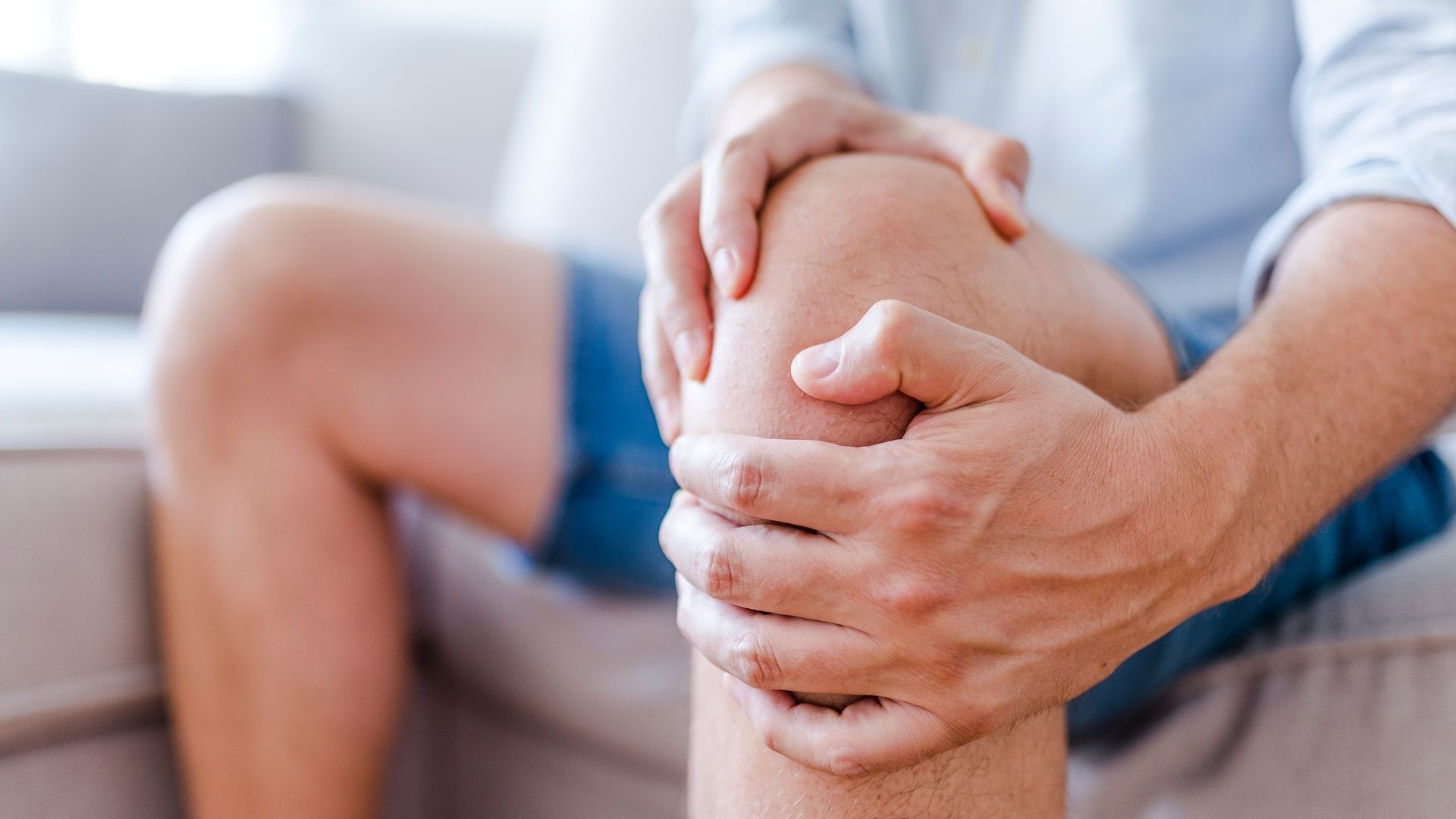
When you think about knee osteoarthritis, you probably think about the joint itself: worn cartilage, stiffness, inflammation, and pain with movement. But emerging research suggests that the experience of chronic pain may be influenced by something farther away from the knee: the gut.
That does not mean your gut is causing your knee pain. It does mean that the relationship between nutrition, the gut microbiome, inflammation, and the nervous system may be more important to chronic pain than we once understood.
A 2026 randomized controlled trial published in Nutrients explored this connection by examining whether inulin, a type of prebiotic fiber, could affect pain and pain sensitivity in adults with knee osteoarthritis. Researchers also looked at physiotherapy supported exercise to compare the effects of nutrition and physical activity.
What is a prebiotic?
Prebiotics are types of dietary fiber that are not fully digested by the body. Instead, they serve as fuel for certain bacteria in the gut.
One of the best studied examples is inulin, a soluble fiber found naturally in foods such as chicory root and Jerusalem artichokes. When gut bacteria ferment these fibers, they produce short chain fatty acids such as butyrate. These compounds can interact with the gut, immune system, metabolism, and potentially the way the body processes inflammation and pain.
This is part of what researchers refer to as the gut brain axis, the complex communication network connecting the gastrointestinal tract with the nervous system.
What did the study find?
The study followed 117 adults with knee osteoarthritis for six weeks. Participants received daily inulin, physiotherapy supported exercise, both interventions, or a placebo.
Both inulin and exercise produced meaningful reductions in knee pain. The improvements were large enough to exceed the study’s predefined threshold for a clinically meaningful change.
But the interventions did not affect the body in exactly the same way.
The exercise group showed improvements in physical function, including measures of walking and getting up from a chair. The inulin group showed improvements in grip strength as well as several measures of pain sensitivity, which are designed to assess how the nervous system responds to painful stimuli.
Interestingly, combining inulin and exercise did not produce a synergistic effect. In other words, the researchers did not find evidence that doing both automatically produced a greater reduction in pain than either intervention alone.
The gut inflammation connection
The researchers also looked at biological markers that might help explain these findings.
Inulin supplementation increased levels of butyrate and GLP 1, a hormone involved in metabolism. Higher GLP 1 levels were associated with improvements in grip strength and knee related function.
That is an interesting finding, but it needs to be interpreted carefully. An association does not prove that increased GLP 1 caused the improvements. The study also did not establish that changes in the gut microbiome directly caused the reduction in pain.
In fact, the researchers found no significant relationship between changes in circulating short chain fatty acids and changes in pain or physical function.
That distinction matters.
Good medical research does not just ask, Did something improve? It also asks, Why did it improve? and What can we confidently conclude from the data?
What does this mean if you have osteoarthritis?
It is too early to say that people with knee osteoarthritis should take inulin or another prebiotic supplement specifically to treat their pain. This was a six week study, and the researchers were investigating a particular dose and intervention under controlled conditions.
What the study does demonstrate is the value of looking at chronic disease from more than one angle.
Osteoarthritis may involve a painful joint, but managing the condition does not necessarily stop at the joint. Physical activity can improve strength and function. Nutrition can influence metabolism and the gut environment. The nervous system plays a role in how pain is processed and experienced. Weight, sleep, cardiovascular health, medications, and other medical conditions can also influence a person’s overall health and ability to remain active.
That is the broader perspective behind Lifestyle Medicine.
Lifestyle medicine is not about replacing medical treatment with supplements, eliminating medications, or assuming that every health problem can be solved with diet and exercise. It is about identifying evidence-based lifestyle factors that can be used as part of medical care, measuring their effects, and building a treatment plan around the individual patient.
The goal is not to find a magic fiber for knee pain.
The goal is to understand the whole patient well enough to determine which interventions are supported by evidence, which outcomes matter, and how those interventions can work alongside appropriate medical treatment.
As research continues to uncover the connections between the gut, immune system, metabolism, and nervous system, those connections may give physicians even more tools for treating chronic disease. For now, this study offers another reason to take nutrition and physical activity seriously as measurable components of health care.
Source: Kouraki A, et al. Effect of Prebiotic Supplementation With and Without Physiotherapy on Pain and Pain Sensitivity in People With Knee Osteoarthritis. Nutrients. 2026;18(5):714.